Navigating Hybrid Rewards: How US Bettors Combine Sportsbook Free Bets with Poker Promotions
Uma Schmitt · Oct 1, 2026
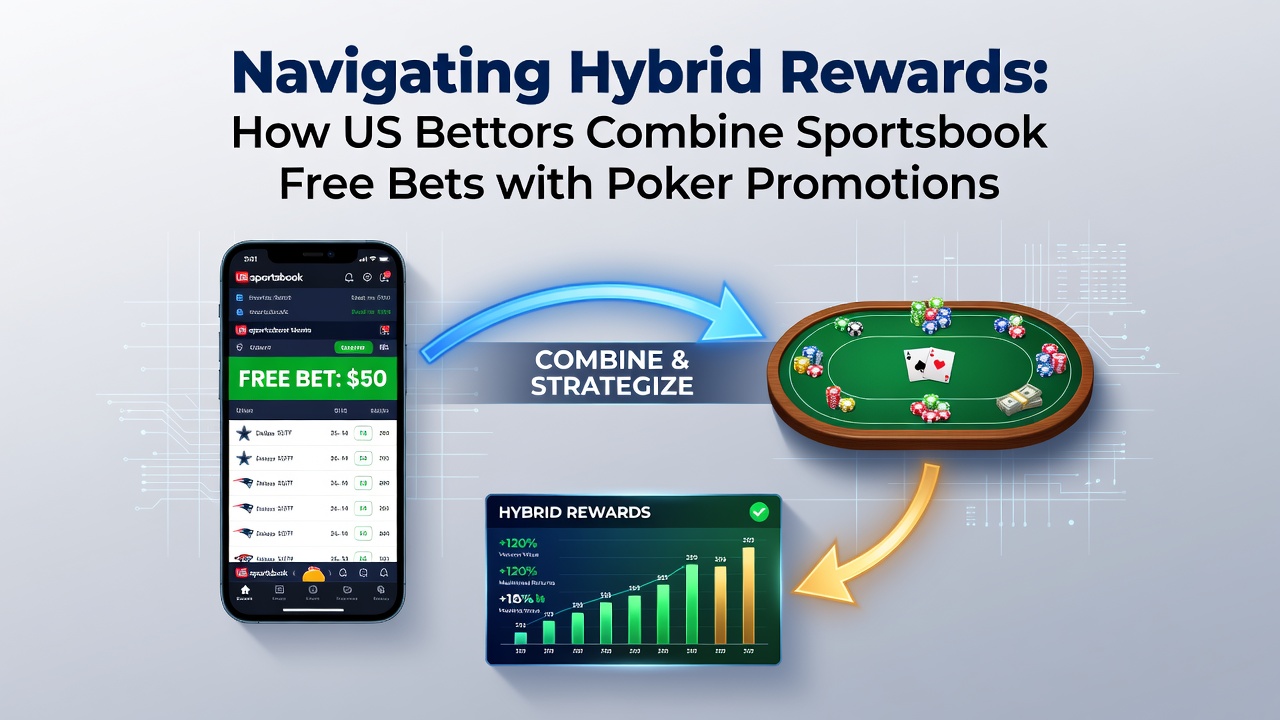
Navigating Hybrid Rewards: How US Bettors Combine Sportsbook Free Bets with Poker Promotions
US bettors in regulated markets have developed methods to layer sportsbook free bets alongside poker site promotions, and data from state reports shows increased activity in this area during 2026. Operators in states such as New Jersey, Pennsylvania, and Michigan issue free bet credits that require minimum odds or stake thresholds before conversion to cash, while poker rooms run separate offers including deposit matches, rakeback percentages, and tournament tickets that carry their own playthrough conditions.
Those who track both verticals often route winnings from one platform into the other to satisfy rollover requirements without additional deposits, and this approach appears in player forums and operator analytics from October 2026 onward. Sportsbook free bets typically expire within seven to thirty days, whereas poker bonuses may extend across multiple sessions, creating staggered timelines that reward careful scheduling rather than simultaneous claims.
Mechanics of Sportsbook Free Bet Offers
Free bet promotions in US sportsbooks usually arrive as risk-free wagers or no-deposit credits tied to first deposits or specific events, and users must select qualifying markets before the credit activates. Once placed, any returns above the stake amount become withdrawable after the terms clear, yet the original stake remains non-refundable in most cases. Bettors combine these with poker rewards by converting cleared sportsbook funds into poker bankrolls, especially when a poker room shares the same operator group and allows internal transfers.
Poker Promotion Structures Across Platforms
Poker promotions in regulated US markets include welcome bonuses that match initial deposits up to set limits, ongoing rakeback programs that return a percentage of fees generated, and freerolls that award tournament entries at no cost. These offers carry distinct wagering conditions compared with sportsbook credits, and players frequently allocate free bet proceeds toward poker deposits to unlock the match percentage without using personal funds. Research from the American Gaming Association indicates that multi-vertical accounts grew in states with overlapping licenses during the first three quarters of 2026.
Combining Strategies Observed in Practice
One documented pattern involves claiming a sportsbook free bet on a low-odds market to minimize variance, clearing the credit quickly, then moving the resulting balance to a linked poker account for a deposit match. Another approach uses poker rakeback earnings to fund additional sportsbook wagers that trigger reload bonuses, creating a loop where each vertical feeds the next. Observers note that timing matters because many platforms reset weekly or monthly leaderboards, and players who align free bet expirations with poker freerolls reduce idle capital exposure.
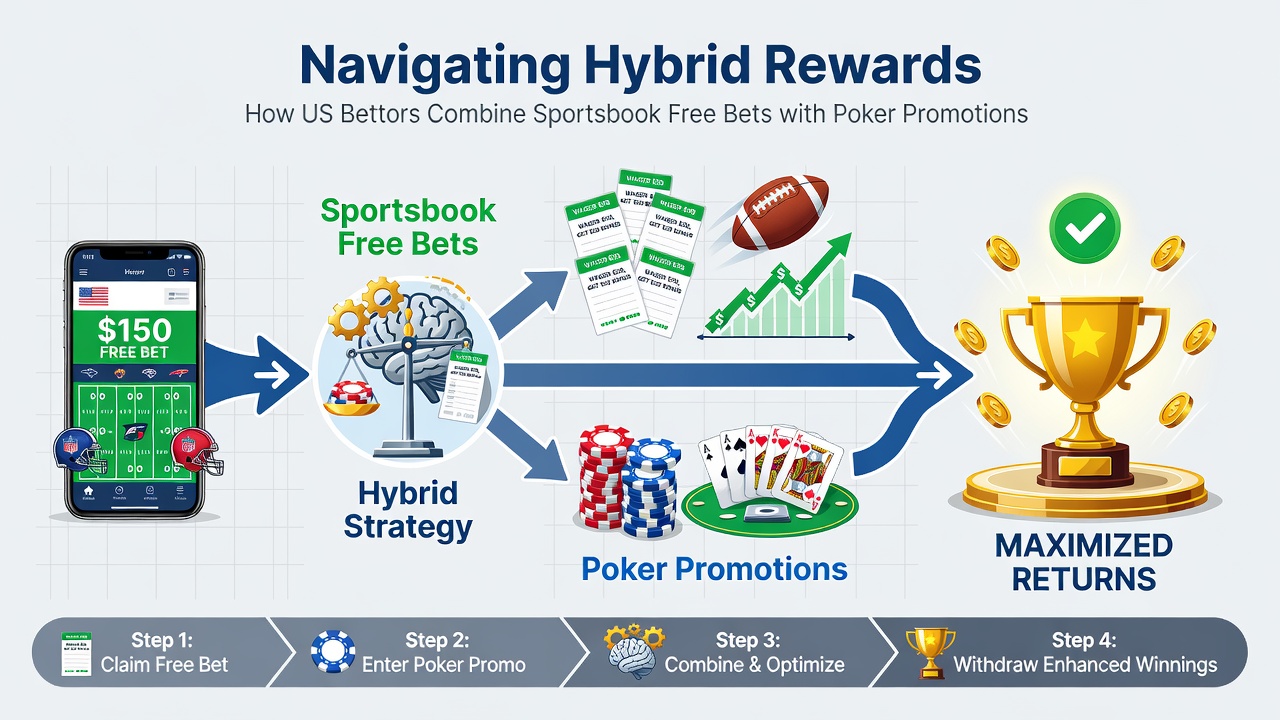
State gaming data from Nevada and New Jersey reveals that hybrid account holders maintained higher average session counts than single-vertical users in October 2026, although aggregate spend figures stayed consistent with prior periods. Operators respond with cross-promotions that require activity in both products within a set window, and these campaigns further encourage the layering behavior.
Regulatory and Compliance Factors
Each state maintains separate rules for bonus clearing, and bettors must verify that transferred funds comply with both sportsbook and poker licensing requirements. The Nevada Gaming Control Board publishes quarterly summaries that track bonus redemption rates across verticals, while academic analyses from the University of Nevada, Las Vegas examine how multi-product incentives affect player retention without altering overall risk profiles. Those who maintain separate ledgers for each promotion type avoid unintended violations when funds move between accounts.
Conclusion
US bettors continue to refine methods that pair sportsbook free bets with poker promotions through sequenced claims and internal transfers where permitted. State-level data and operator reports from 2026 confirm measurable uptake of these hybrid approaches, and the pattern persists where licensing structures allow shared wallets or quick fund movement between products. Players who monitor expiration dates, rollover thresholds, and cross-vertical campaigns maintain activity across both offerings while staying within published terms.